
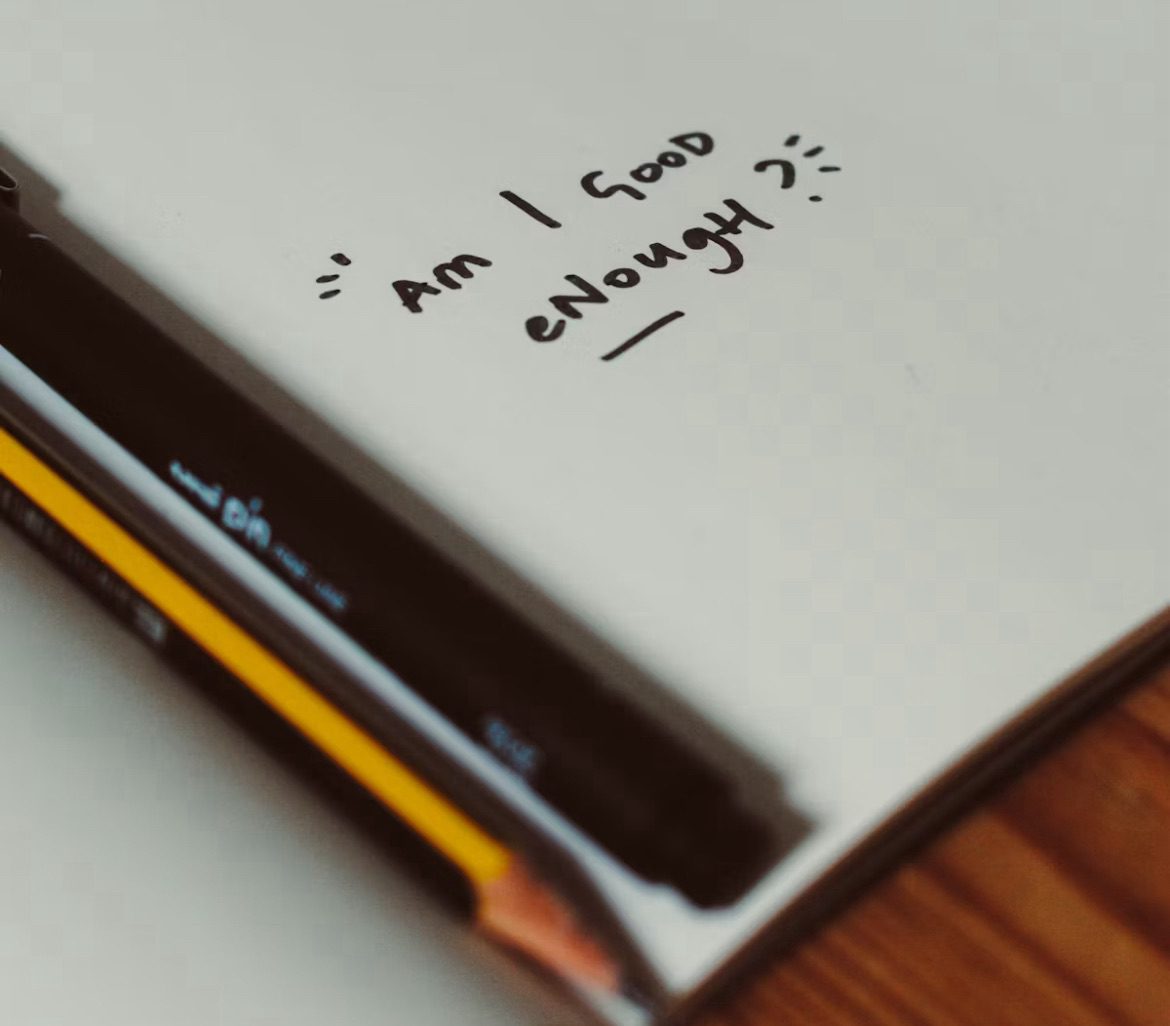
Journaling for Anxiety: How to Calm Your Mind on Paper
It can feel difficult to explain anxiety, even to yourself. Sometimes it feels like a constant background noise. Other times it arrives suddenly, bringing a rush of thoughts that are hard to slow down, or make sense of. You may try to think your way out of it, only to feel more tangled in the process. Journaling for anxiety offers a different approach to manage those feelings.
Instead of trying to instantly solve everything in your mind, it gives those thoughts somewhere to go. A place where they can be seen more clearly, rather than constantly carried.
If anxiety has felt overwhelming lately, this can be a simple place to begin.
Why Journaling Can Help with Anxiety
When anxious thoughts stay in your head, they often loop.
You revisit the same concerns, imagine different outcomes, and try to find some kind of certainty where there may not be any. Over time, this can make everything feel more intense.
Writing creates some distance.
When thoughts move from your mind onto the page, they often feel more manageable. You can see them, question them, and respond to them more calmly.
Personally, I’ve found that anxiety feels heavier when it stays unspoken. Even a few lines on paper can take the edge off – simply because you are no longer holding all of those thoughts in your head.

Which Types of Journaling Work Best for Anxiety?
Not every style of journaling will feel helpful when you are anxious, but it can look different for everyone.
In general, the most supportive approaches are the ones that allow you to write freely, without pressure or structure.
Free Writing
Free writing can be especially useful when your thoughts feel overwhelming, as it gives everything a place to go without needing to organize it first.
When you feel anxious, more structured styles can sometimes feel too restrictive, or difficult to follow, particularly if you are feeling overwhelmed.
Free writing offers a gentler approach. You simply write whatever comes to mind – as much or as little as you feel – without expectation or pressure.
Reflective Journaling
Reflective journaling offers a slightly different approach. Instead of writing everything as it comes, it helps you explore what may be sitting beneath the anxiety.
This can be useful when certain thoughts keep repeating, or when something feels unsettled, but unclear.
By slowing down and gently questioning your thoughts, you may begin to understand what is really causing the feeling, rather than just reacting to it.
Prompted Journaling
If you are feeling overwhelmed and don’t know where to begin, prompted journaling can offer a gentle starting point.
Instead of starting with a blank page, you respond to a simple question or idea, which can make it easier to begin when your thoughts feel unclear.
This can be especially helpful when you are unsure what to write, as the prompt provides just enough direction, without adding pressure.
If you’d like a broader overview of different journaling styles, you can explore them here and see what feels most natural for you today.
A simple place to begin
If you are still unsure which approach to try, free writing is often the easiest place to start.
When anxiety feels overwhelming, structure can sometimes add pressure. Free writing removes that. You don’t need to organize your thoughts, or decide what matters most. What is counts, is you simply begin.

You Do Not Need to Write Perfectly
There can be a quiet pressure to journal “well’ – especially when you are already feeling anxious.
However, this is not the goal.
Your writing will most likely be:
- messy
- repetitive
- unclear
- unfinished
In fact, anxiety rarely arrives in neat sentences.
If all you write down is ‘I feel overwhelmed and I don’t know why’ – don’t worry, that is enough.
Often, once you begin, something else follows.
Start by emptying your thoughts
Free writing is one of the simplest ways to journal for anxiety – writing down everything that is currently on your mind.
Not in any kind of order. Not filtered: just as it appears.
Your thoughts might include:
- worries
- reminders
- fears
- things you feel behind on
- thoughts that keep repeating
You are not trying to solve anything yet. You are simply creating space.
Once everything is on the page, the intensity often softens slightly. What initially felt like one large feeling can begin to separate into smaller, more manageable parts.
Gently question what you have written
After you have written for a few minutes, you may notice certain thoughts stand out.
Rather than accepting them immediately, you may like to try to respond to these with gentle curiosity.
For example:
Is this thought completely true?
Am I assuming the worst outcome?
What would I say to someone else in this situation?
You are not trying to force positivity. This is about loosening the grip of anxious thinking.
Even a small shift in perspective can create some relief.
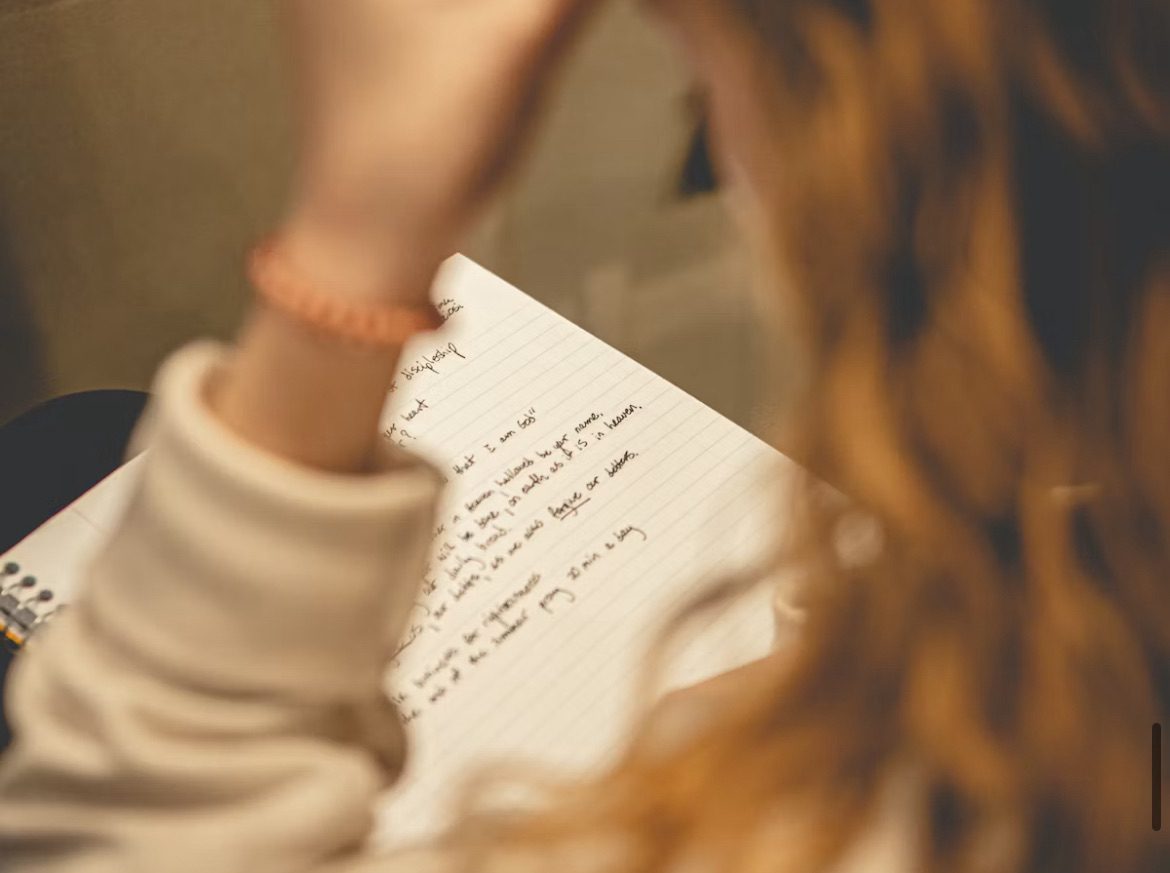
Focus on what you can control
Anxiety often grows around things that feel uncertain or out of your control.
Journaling can help bring your attention back to what is steady and identifiable.
This does not remove uncertainty, but it can reduce feelings of being overwhelmed by everything at once.
When words feel difficult
Some days, even writing may feel like too much.
At times, your journaling can be simpler.
On these days, you might simply:
- write a single sentence
- list a few words
- repeat the same thought
- describe how your body feels
There is no minimum requirement.
Showing up, even briefly, is enough.

Let this be a safe space, not another task
It is easy to turn journaling into something else you feel you “should” be doing.
However, when you are feeling anxious, the last thing you need is more pressure.
This space does not need to be consistent, structured, or productive.
It only needs to feel safe.
Some days you may write for ten minutes. Other days, not at all. Both are absolutely fine.
Anxiety does not mean something is wrong with you.
It often means your mind is trying to process uncertainty, protect you, or make sense of something that feels unresolved.
Journaling will not make anxiety disappear overnight.
However, it can help you understand it, soften it, and create moments of calm within it.
Journaling for anxiety is not about finding perfect answers.
It is about creating space.
Space to write what feels difficult. To slow down your thoughts. To breathe. Space to respond more gently to yourself.
As always, you are welcome to take what resonates, and leave the rest.
I hope journaling becomes a helpful quiet practice you can turn to for support when things feel too much.